For: importers, procurement teams and finance staff who need to know which documents to prepare before sending a renminbi payment to a supplier in China - and which ones are only sometimes required.
Key takeaways
- There is no universal, one-size-fits-all document checklist for every China payment.
- A typical payment is supported by a commercial invoice, a contract or purchase order, beneficiary details and a clear payment purpose.
- Additional documents may be requested depending on the route, amount, purpose, provider, bank, jurisdiction and risk profile.
- Distinguish typical documentation from conditional documentation and enhanced due diligence (EDD).
- Consistency across your documents - names, amounts and purpose - is what keeps a payment moving.
- Prepare documents before you transact; requesting them mid-payment is a common cause of delay.
Why documentation matters for renminbi payments
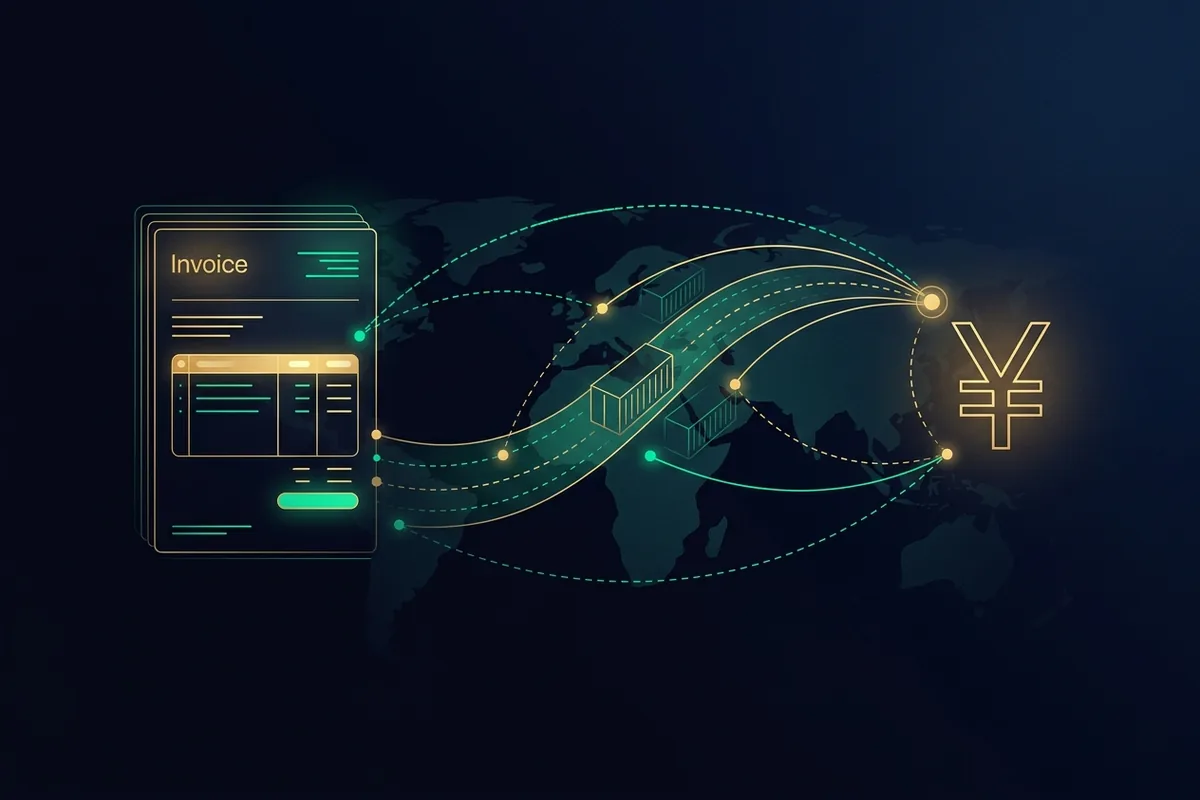
Cross-border renminbi payments are processed against the underlying trade. In plain terms, your bank or payment provider needs to see that the money is paying for a real transaction - goods or services actually being supplied - and that the people and accounts involved are who they claim to be. Documentation is how that is evidenced.
The People's Bank of China (PBOC) and the State Administration of Foreign Exchange (SAFE) set the framework for cross-border renminbi and foreign-exchange activity, and individual banks and providers apply their own controls on top. That is why two businesses paying similar suppliers can face slightly different document requests: the baseline is similar, but the details are route-, bank- and risk-dependent.
Typical documentation (most payments)
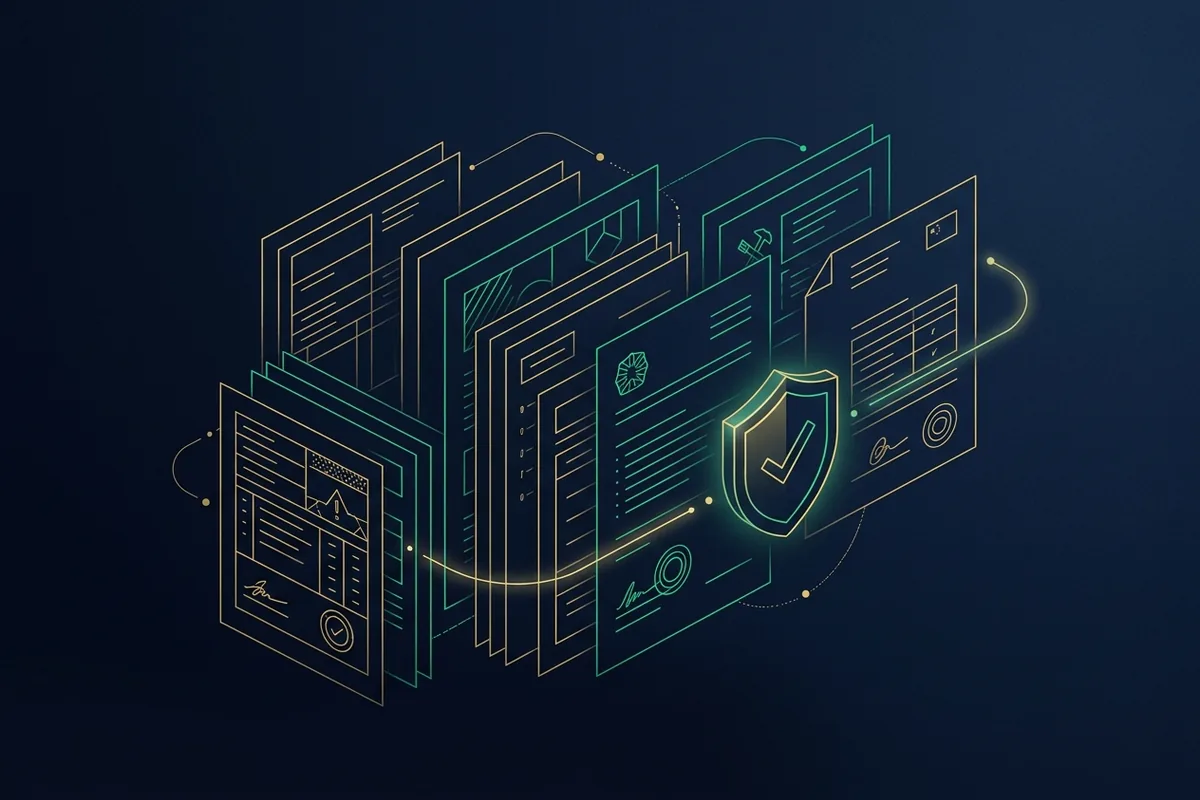
For a straightforward supplier payment, expect to prepare the following. This is a common starting point, not a guarantee that only these will be requested.
| Document | What it evidences |
|---|---|
| Commercial or pro forma invoice | The amount, currency, goods or services and the parties |
| Purchase order or sales contract | The agreement behind the payment (strongly recommended) |
| Supplier legal information | The registered Chinese legal name and, where available, the Unified Social Credit Code |
| Beneficiary account details | The account name, number and bank identifiers authorised to receive funds |
| Purpose of payment | A clear, specific description (e.g. goods plus the purchase-order number) |
A specific payment reference matters more than people expect. Vague descriptions such as "payment for goods" can trip automated compliance filters, while a precise reference tied to your order helps the payment clear smoothly.
Conditional documentation (route- and transaction-dependent)
Depending on the payment route, transaction purpose, provider, bank, jurisdiction and risk profile, additional documentation may be requested. Common examples include:
- Goods description and, where relevant, HS/commodity classification;
- Shipping and trade documents - packing list, bill of lading or airway bill;
- Customs declaration or export records, where applicable to the trade;
- Proof of the supplier relationship where the beneficiary name differs from the trading name;
- Evidence for a change of bank details during a live order.
None of these is universal. They are requested when the transaction, the route or the compliance assessment calls for them.
Enhanced due diligence (higher-risk situations)
Some payments attract an extra layer of checks known as enhanced due diligence (EDD). EDD is not a judgement about your business - it is a proportionate response to risk indicators such as large amounts, a first-time counterparty, complex ownership, or sensitive goods and destinations. It may involve:
- Source-of-funds or source-of-wealth information;
- Beneficial-ownership and director information;
- Further evidence of the underlying trade or business activity;
- Additional identity or address verification.
Whether EDD applies, and exactly what it involves, depends on the provider, bank, jurisdiction and risk assessment. Review the current KeyBS Pay KYC, KYB and EDD requirements before you apply so there are no surprises.
Need to pay a verified supplier in China? Learn how KeyBS Pay supports eligible international business payments to China, with clear document guidance during onboarding. Start a China supplier payment.
Supplier legal identity and the beneficiary
A supplier's trading name, website name and registered legal name are often different, and the beneficiary account may be different again. That is not automatically a problem - but it must be explained and verified before funds move. At minimum, confirm the registered Chinese legal name, current registration status, the beneficiary account name, and any sanctions or adverse-risk indicators. To run these checks in one place, use supplier verification.
Customs, VAT and the consistency principle
Where a payment relates to an export, the trade documents, the declaration and the payment are expected to be consistent with one another. Suppliers may also rely on export VAT rebates, which vary by product category and depend on the transaction being correctly recorded as an export. You are not responsible for your supplier's tax position, but mismatched documents can cause delays on both sides. Keep your records aligned, and let your supplier and their bank manage the mainland tax formalities. Confirm any specifics with a qualified adviser - rebate rules and rates change.
A pre-payment documentation checklist
- Complete your business onboarding (KYB) and provide accurate expected-activity information.
- Confirm the supplier's registered Chinese legal name and registration status.
- Confirm the beneficiary account belongs to the approved entity, or document the relationship.
- Match the invoice, contract, payment purpose and beneficiary details.
- Write a specific payment reference (goods plus purchase-order number).
- Prepare shipping or customs documents where the trade calls for them.
- Have source-of-funds evidence ready in case EDD applies.
- Independently verify any change of bank details.
- Retain the invoice, verification result, quote and payment confirmation.
Frequently asked questions
What documents are required to pay a supplier in China?
There is no single mandatory list for every payment. A typical renminbi payment is supported by a commercial invoice, a contract or purchase order, beneficiary details and a clear purpose of payment. Depending on the route, purpose, provider, bank, jurisdiction and risk profile, additional documents such as shipping records, customs documents or source-of-funds evidence may be requested.
Do I always need a contract to pay a Chinese supplier?
Not always, but a signed contract or purchase order strongly supports the payment because cross-border renminbi transactions are assessed against the underlying trade. For larger, first-time or higher-risk payments, a contract is commonly expected.
What is a payment purpose code and why does it matter?
Cross-border renminbi payments into mainland China are expected to carry a valid purpose-of-payment indicator, as set out by the PBOC. A clear, specific reference helps the payment pass automated checks and reduces the chance of delay.
What is enhanced due diligence (EDD) documentation?
EDD is an extra layer of checks for higher-risk situations - large amounts, new counterparties, complex ownership or sensitive goods. It can involve source-of-funds or source-of-wealth evidence, ownership information or further proof of the trade. Whether it applies depends on the provider, bank, jurisdiction and risk assessment.
How long should I keep supplier-payment records?
Keep your invoice, contract, customs and shipping documents and payment confirmations for your records and any tax or audit needs. Retention periods vary by jurisdiction, so confirm what applies to your business with a qualified adviser.
Start your China supplier payment
Prepare your documents once, then fund eligible renminbi payments with clear guidance at each step.
Start a China supplier payment
About the author
The KeyBS Pay Editorial Team publishes practical guidance for businesses that pay and collect across borders. KeyBS Pay is an Africa-focused B2B financial-technology platform providing cross-border payment, FX, treasury, supplier verification and international trade-payment tools. Our articles are written for operators and finance teams and reviewed for compliance accuracy before publication.
Compliance review: Doreen Anokyewaa Appiah, Director of Compliance. Last reviewed: 16 June 2026.
Important information
KeyBS Pay is a technology platform and not a bank. Payment, foreign-exchange and trade services are provided directly or through regulated financial-institution partners where applicable, and are subject to eligibility, jurisdiction, KYB/KYC, AML review, documentation and partner-route approval. Coverage, currencies, funding methods, pricing and timing are route-dependent and can change. Supplier verification and escrow reduce particular risks but do not eliminate fraud, performance, product-quality or delivery risk. This article is general information about how renminbi supplier payments work; it is not legal, tax, accounting or financial advice, and it does not describe the rules of any specific bank or authority. Confirm current requirements with your provider, your bank and a qualified adviser before you transact.
Sources and further reading
- People's Bank of China (PBOC), accessed 16 June 2026.
- State Administration of Foreign Exchange (SAFE), accessed 16 June 2026.
- Cross-Border Interbank Payment System (CIPS), accessed 16 June 2026.
- SWIFT, accessed 16 June 2026.
- Hong Kong Monetary Authority - offshore renminbi business, accessed 16 June 2026.
- KeyBS Pay - Pay to China, accessed 16 June 2026.
- KeyBS Pay - Supplier Verification, accessed 16 June 2026.
- KeyBS Pay - KYC, KYB and EDD Requirements, accessed 16 June 2026.