For: businesses deciding whether to accept renminbi-denominated invoices from Chinese suppliers, and finance teams that want to understand the workflow, the FX trade-offs and how to compare cost properly.
Key takeaways
- RMB invoicing means the supplier prices and invoices the trade in renminbi rather than in US dollars.
- It can reduce double conversion and remove a currency buffer suppliers sometimes add to dollar prices - but it is not automatically cheaper.
- With an RMB invoice, the buyer generally takes on the conversion and its FX risk.
- Cross-border renminbi is commonly cleared through CIPS, sometimes alongside SWIFT messaging.
- Compare the total you pay against the exact renminbi the supplier receives - not the headline rate.
- Availability, documentation and settlement remain route-, bank- and compliance-dependent.
What does RMB invoicing mean?
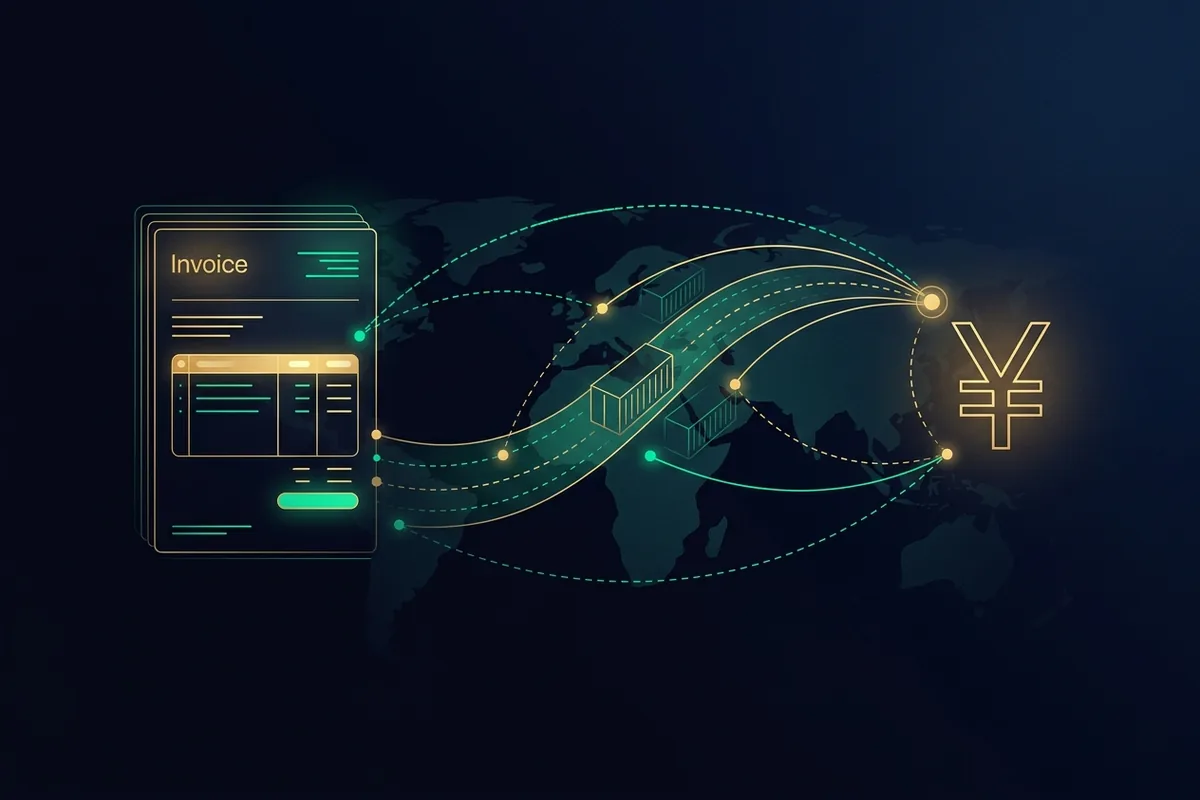
Traditionally, many Chinese suppliers invoiced international buyers in US dollars. RMB invoicing is the alternative: the supplier denominates the invoice in renminbi (RMB), and the buyer settles that renminbi amount. If you already hold renminbi you can pay directly; if not, you convert your local currency or dollars into renminbi to pay.
The practical shift is where the currency conversion happens. With a dollar invoice, the supplier usually converts dollars into renminbi on their side. With a renminbi invoice, that conversion moves to your side - which gives you control over how and when it is done, along with responsibility for the outcome.
Why do Chinese suppliers invoice in RMB?
Suppliers have practical reasons to prefer renminbi:
- Certainty. They receive a fixed renminbi amount, so they are not exposed to the dollar-to-renminbi move between quote and payment.
- No embedded buffer. When quoting in dollars, some suppliers add a margin to protect against currency swings. Removing that can create room to negotiate.
- Domestic settlement. Receiving renminbi into a mainland account can simplify their banking and their export and tax formalities, which vary by product and are theirs to manage.
For the underlying market context - onshore CNY versus offshore CNH - see CNY vs CNH: what businesses paying Chinese suppliers need to know.
RMB invoice vs USD invoice: a neutral comparison
| Dimension | RMB invoice | USD invoice |
|---|---|---|
| Who handles FX conversion | The buyer (into renminbi) | The supplier (dollars into renminbi) |
| Supplier preference | Often preferred - fixed renminbi received | Traditional, still widely used |
| Rate transparency | Buyer sees the renminbi rate and fees directly | Conversion happens on the supplier side, less visible to the buyer |
| Currency buffer in price | Less need for a supplier buffer | A buffer may be built into the dollar price |
| Payment complexity | Requires a renminbi-capable route | Familiar dollar rails |
| Reconciliation | Match against a fixed renminbi amount | Match against a dollar amount |
Neither column is universally better or cheaper. The right choice depends on your visibility over rates, your ability to manage FX, and what your supplier is willing to accept.
FX considerations for buyers
When you accept a renminbi invoice, you own the conversion. That is an opportunity and a responsibility. To manage it well:
- Get a quote that shows the funding amount, the renminbi receive amount, the applied rate and the fees.
- Watch the onshore/offshore distinction - your rate may reference the offshore (CNH) market even when funds settle onshore.
- For larger or recurring payments, consider how you will manage rate movements over time. Our FX and Treasury tools are built for exactly this.
Need to pay a renminbi invoice from a supplier in China? Learn how KeyBS Pay supports eligible international business payments to China, with the renminbi amount and fees shown on your quote. Pay RMB supplier invoices.
The renminbi payment workflow
- Onboard and complete KYB. Your provider verifies your business and expected activity.
- Receive the renminbi invoice. Confirm the exact renminbi amount and the beneficiary account.
- Verify the supplier. Check the registered Chinese legal name, status and beneficiary consistency - see supplier verification.
- Get a quote. Review the funding currency, renminbi receive amount, rate, fees and indicative settlement window.
- Fund the payment. Provide a specific payment reference tied to your order.
- Settle and reconcile. The renminbi is routed - commonly via CIPS - to the supplier's mainland account; match it against the invoice.
Confirming settlement and reconciliation
A payment is not finished when it leaves your account - it is finished when it is reconciled. Confirm the renminbi amount received, the beneficiary, the reference and the date, and file the payment confirmation with your trade documents. Cross-border renminbi settlement is commonly cleared through the Cross-Border Interbank Payment System (CIPS), sometimes alongside SWIFT messaging, depending on the banks involved.
Potential delays and why they happen
There is no single settlement time for every payment. Common causes of delay include incomplete or inconsistent documentation, a beneficiary name that does not match the registered supplier, a vague payment purpose, cut-off times, receiving-bank processing, and additional compliance review. Preparing documents in advance - see China supplier payment documentation - removes most of these before they start.
Common RMB invoicing mistakes
- Comparing a headline exchange rate instead of the renminbi the supplier actually receives.
- Assuming RMB is always cheaper than USD - it depends on rates, fees and FX management.
- Overlooking the onshore/offshore rate gap on large or repeated invoices.
- Funding before verifying the registered supplier and beneficiary.
- Using a vague payment reference that triggers compliance holds.
- Failing to reconcile the receive amount against the invoice.
Frequently asked questions
Can a Chinese supplier invoice an overseas buyer in RMB?
Yes. Many suppliers can invoice international buyers in renminbi. The invoice is denominated in RMB and you settle the renminbi amount to the supplier's mainland account, subject to eligibility, documentation, compliance review and the route your provider or bank can offer.
What is RMB invoicing?
RMB invoicing means the supplier prices and invoices the trade in renminbi rather than in dollars. The buyer then holds renminbi or converts their own currency to pay, which shifts the conversion step to the buyer's side and can reduce double conversion.
Is it cheaper to pay a Chinese supplier in RMB or USD?
Neither is universally cheaper. RMB invoicing can remove a conversion layer and a supplier's currency buffer, but the real cost depends on the rate, the fees and how each side manages FX. Compare the total you pay against the exact amount the supplier receives.
Who bears the FX risk with RMB invoicing?
With an RMB invoice the buyer generally takes on the conversion and its risk, because the amount owed is fixed in renminbi. With a USD invoice the supplier typically manages the conversion. Which suits you depends on your visibility over rates and your ability to manage FX.
How do I confirm a renminbi supplier payment settled correctly?
Reconcile against the invoice: confirm the renminbi amount received, the beneficiary, the reference and the date, and keep the confirmation with your trade documents. If a payment is delayed or returned, check documentation consistency and beneficiary details first.
Pay RMB supplier invoices
Settle renminbi invoices to eligible suppliers in China with the receive amount, rate and fees shown before you confirm.
About the author
The KeyBS Pay Editorial Team publishes practical guidance for businesses that pay and collect across borders. KeyBS Pay is an Africa-focused B2B financial-technology platform providing cross-border payment, FX, treasury, supplier verification and international trade-payment tools. Our articles are written for operators and finance teams and reviewed for compliance accuracy before publication.
Compliance review: Doreen Anokyewaa Appiah, Director of Compliance. Last reviewed: 16 June 2026.
Important information
KeyBS Pay is a technology platform and not a bank. Payment, foreign-exchange and trade services are provided directly or through regulated financial-institution partners where applicable, and are subject to eligibility, jurisdiction, KYB/KYC, AML review, documentation and partner-route approval. Coverage, currencies, funding methods, pricing and timing are route-dependent and can change. Supplier verification and escrow reduce particular risks but do not eliminate fraud, performance, product-quality or delivery risk. This article is general information about how renminbi supplier payments work; it is not legal, tax, accounting or financial advice, and it does not describe the rules of any specific bank or authority. Confirm current requirements with your provider, your bank and a qualified adviser before you transact.
Sources and further reading
- People's Bank of China (PBOC), accessed 16 June 2026.
- State Administration of Foreign Exchange (SAFE), accessed 16 June 2026.
- Cross-Border Interbank Payment System (CIPS), accessed 16 June 2026.
- SWIFT, accessed 16 June 2026.
- Hong Kong Monetary Authority - offshore renminbi business, accessed 16 June 2026.
- KeyBS Pay - Pay to China, accessed 16 June 2026.
- KeyBS Pay - FX and Treasury, accessed 16 June 2026.
- KeyBS Pay - Supplier Payments, accessed 16 June 2026.