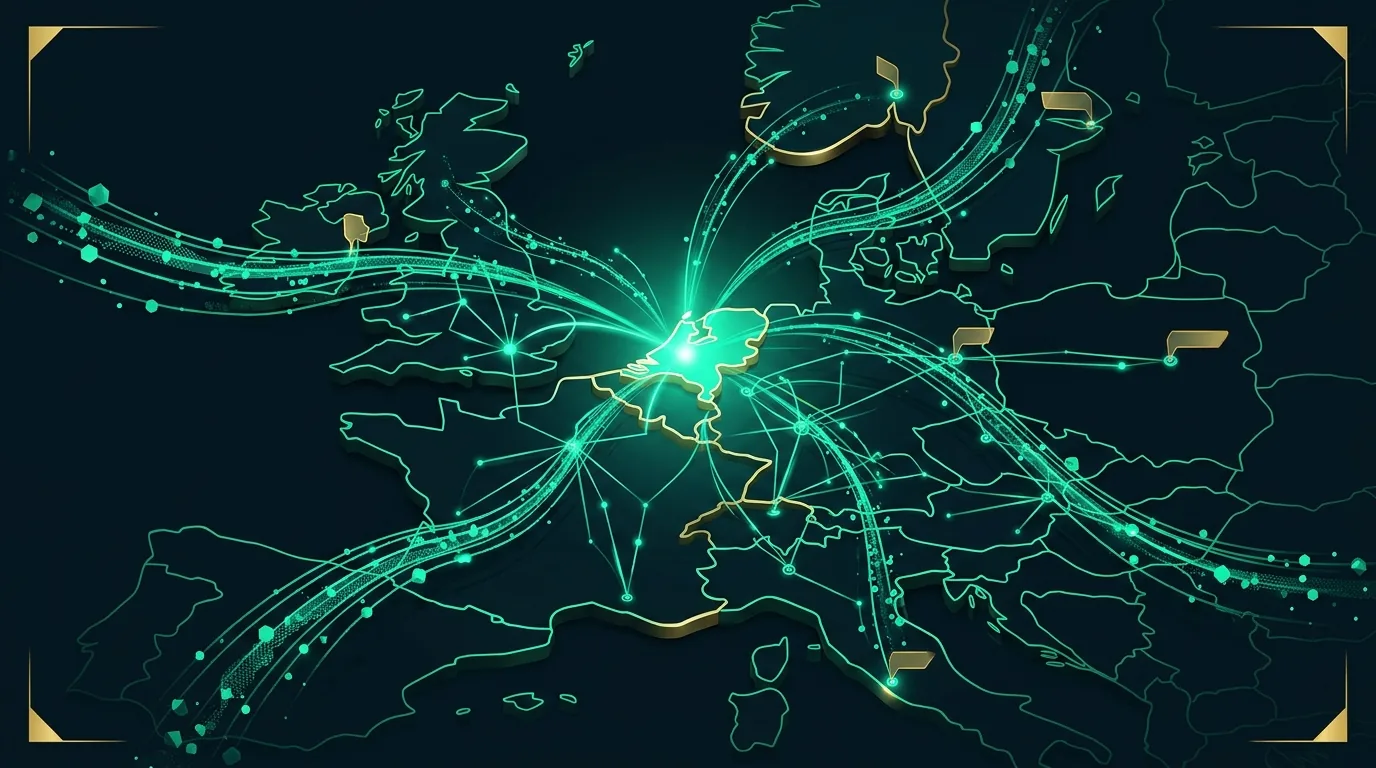
As the logistics gateway to Europe, the Netherlands stands at the forefront with its cutting-edge iDEAL instant payment rails and rapid EUR settlements. Discover how to optimize your business payment strategies by integrating these capabilities. For more, explore our global payout services.
- Leverage the Netherlands' advanced iDEAL payment rails for instantaneous transactions.
- Understand how SEPA facilitates seamless EUR payments across Europe.
- Avoid common pitfalls by navigating the regulatory landscape accurately.
- Consider departmental needs to maximize the efficiency of business payments.
- Consult corridor strategies for optimal USD to EUR transactions.
What Is EUR Business Payments to the Netherlands?
Situated at the heart of Europe’s logistics network, the Netherlands serves as a vital gateway for business activities throughout the continent. Renowned for its ports and well-integrated transport infrastructure, it facilitates seamless trade flows and connectivity, making it a prime hub for corporations looking to expand their European reach.
When considering business payments into the Netherlands, the euro (EUR) remains the cornerstone of financial transactions. As the standard currency across the Eurozone, the EUR offers stability and uniformity, reducing currency conversion complexities for businesses operating within member states like France, Germany, and Italy. This consistency in currency helps entities streamline their financial operations, fostering effective financial planning and risk management.
The Netherlands boasts a sophisticated payment ecosystem, marked by efficient and reliable mechanisms such as SEPA (Single Euro Payments Area) and the homegrown iDEAL. SEPA's integration facilitates standardized cross-border electronic payment transfers, making it as easy and swift to pay suppliers in the Netherlands as it would be within one’s local region.
- SEPA: Supports transactions across 36 European countries.
- iDEAL: A popular direct online payment method facilitating real-time transfers.
- Real-time Gross Settlement (RTGS): A high-value system under the aegis of the ECB.
Regulatory oversight from entities like De Nederlandsche Bank (the Dutch Central Bank) ensures the security and compliance of financial operations, fostering confidence among international traders. Such robust infrastructures have cemented the Netherlands' reputation as a forward-thinking, financially secure location for conducting business.
For global enterprises looking to send money to the Netherlands for business purposes, understanding this ecosystem is critical. The country not only provides regulatory stability but also avenues for potential financial growth through its efficient payment channels. By leveraging the strengths of these systems, companies can effectively tap into the advantages the Dutch market offers.
How EUR Payments Work in the Netherlands
Sending money to the Netherlands for business purposes has never been more streamlined, thanks to modern innovations in payment systems. But navigating these can be complex. Here’s a comprehensive guide on how to effectively manage your EUR payments to this pivotal European market.
The first step is to choose the right payment rail. SEPA (Single Euro Payments Area) is ideal for EUR transactions across Europe, offering fast and cost-effective solutions with predictable settlement times. This is particularly advantageous when timing is critical in transaction-heavy sectors like logistics and supply chain management.
In contrast, for international transfers beyond Europe, SWIFT remains a viable option. Although generally slower and potentially more costly due to intermediary banks, it provides broad international reach, ideal for businesses dealing with multiple currencies and complex transactions.
| Payment Rail | Speed | Cost | Geographic Focus |
|---|---|---|---|
| SEPA | 1 business day | Low | Europe |
| SWIFT | 1-5 business days | Variable, generally higher | Global |
| ACH | 1-3 business days | Low | United States |
| Zelle | Minutes | Low | United States |
When paying suppliers in the Netherlands, consider exchange rate fluctuations and potential hidden fees. While SEPA transfers typically incur lower costs, SWIFT transfers may involve various surcharge fees from intermediary banks, affecting the net amount received by your business partner.
Incorporating real-time payment tracking available on certain platforms can enhance transparency and control. Businesses should also remain vigilant to regulatory requirements, particularly those from the Dutch Central Bank (De Nederlandsche Bank), to ensure compliance with local banking laws.
Given the intricacies of international trade and finance, consulting a payments specialist or leveraging comprehensive services like those offered at KeyBS can provide tailored advice to optimize your international payment strategy.
Corridor Example: USD to EUR for Netherlands Suppliers
When managing business payments from the United States to suppliers in the Netherlands, understanding the conversion of USD to EUR is crucial. The fluctuation in exchange rates can significantly affect the cost of transactions. Furthermore, payment methods impact fees, processing times, and compliance workflows, making the right choice imperative for treasury managers and financial officers.
Let's begin by dissecting the costs and fees involved in converting USD to EUR. Exchange rates provided by banks and financial institutions often include a margin above the interbank rate, which is the cost borne by businesses. Additionally, transaction fees—depending on the payment rail used—can vary significantly. SEPA (Single Euro Payments Area) transfers are typically less costly compared to SWIFT payments because of reduced intermediary bank fees in cross-border transactions.
| Payment Rail | Transaction Fee | Processing Time | Additional Costs | Typical Use Case |
|---|---|---|---|---|
| SWIFT | $25–$50 per transaction | 1-5 business days | Exchange rate margin, intermediary fees | Large, global transactions |
| SEPA | €0.50–€5 | 1 business day | Minimal, flat-rate costs within EU | EUR payments within Europe |
| ACH | $0.25–$1.50 | 1-3 business days | Limited to domestic US transactions | Domestic US transactions |
| FedNow | $0.045 per transaction | Instant | Currently limited; pilot phase | Instant US domestic transfers |
Each method not only comes with unique cost structures but different benefits and challenges as well. For example, while SWIFT enables funds to be sent globally, it often incurs high fees and longer processing times. SEPA, on the other hand, is suitable for businesses dealing with multiple EU-based suppliers due to its cost-efficiency and speed within Europe, albeit limited by the EUR zone.
Consider a typical scenario: A US-based SME wants to pay a Dutch supplier €10,000. Using SEPA, the transaction might cost around €5, taking just one business day for the money to reach the Netherlands—minimal currency conversion is needed since it's an intra-EU payment. However, if this transaction is executed via SWIFT, the costs increase with potential intermediary fees, and the transfer time extends to several business days.
In conclusion, selecting the appropriate payment corridor for business transactions to the Netherlands involves weighing costs against delivery speed and reliability, contingent on the payment rail chosen. It's essential to tailor your payment strategies to your business's unique needs, considering factors like transactional volume, frequency, and the geographic locations involved.
Regulatory Landscape for Payments in the Netherlands
The regulatory framework governing payments in the Netherlands is primarily overseen by the Dutch Central Bank (De Nederlandsche Bank, DNB). As a member of the European Union and the Eurozone, the Netherlands follows EU-wide regulations, but DNB plays a vital role in ensuring the stability and security of the payment system.
DNB regulates banks and payment institutions, and it enforces EU-wide directives like the Second Payment Services Directive (PSD2), which strengthens consumer rights and security measures in electronic payments. It also requires financial institutions to meet capital adequacy standards and risk management guidelines.
For firms sending money to the Netherlands, understanding these regulations is critical. Compliance with Anti-Money Laundering (AML) and Counter-Terrorism Financing (CFT) regulations is mandatory. This includes stringent Know Your Customer (KYC) protocols designed to reduce fraud and ensure that cross-border payments are legitimate.
The Netherlands utilizes the Single Euro Payments Area (SEPA) rails which allow seamless euro transactions across over 30 European countries. This contributes to efficient settlement and reduced costs for enterprises in the Eurozone when sending EUR payments. The cooperation of DNB with the European Central Bank (ECB) ensures that these systems remain cutting-edge.
Key Regulations Impacting International Payments:
- PSD2: Enhanced security, consumer protection, and access to banking data for third parties through APIs.
- AML and CFT: Rigorous documentation and reporting requirements to prevent illicit activities.
- Banking Union: Supervisory and resolution frameworks to unify banking legislation across the Eurozone.
The future of payment regulations in the Netherlands and the wider EU looks to increasingly embrace technological advancements, such as Blockchain and cryptocurrencies. There is ongoing discussion within the European Commission about introducing a digital euro, which could significantly reshape the payments landscape.
In conclusion, the Dutch regulatory framework is robust, ensuring that businesses can confidently send and receive EUR payments into and from the Netherlands. It's crucial for companies to stay informed on current and future developments to maintain compliance and optimize their payment strategies.
Edge Cases and Pitfalls in EUR Payments
Conducting business payments into the Netherlands can be seamless with the right strategy, but several challenges lurk in the shadows that companies must navigate. Understanding these edge cases and pitfalls can prevent costly errors and delays.
Handling Currency Conversion Fluctuations
While the official currency in the Netherlands is the Euro (EUR), businesses might deal with complexities involving other currencies, such as USD or GBP. Currency conversion rates can fluctuate due to market dynamics influenced by political events, regulatory changes, or economic shifts like those overseen by institutions such as FinCEN or the ECB. Consequently, businesses sending payments from non-Euro countries should monitor exchange rates closely to keep payment costs predictable.
Common Mistakes to Avoid
Several common mistakes frequently plague international transactions into the Netherlands:
- Ignoring SEPA regulations: SEPA transfers offer an efficient mode of EUR transactions but failing to adhere to SEPA protocols—such as correct IBAN format—can result in failed payments.
- Overlooking bank holiday schedules: Not accounting for local Dutch or sending country holidays can delay transactions.
- Underestimating intermediary bank fees: While SEPA aims to make intra-EU payments seamless, intermediary fees outside SEPA jurisdictions might apply.
Strategies for Error Mitigation
To manage these pitfalls proactively, businesses should implement specific strategies:
- Engage in risk hedging: Use financial instruments like forward contracts to lock in exchange rates when sending substantial amounts over extended periods.
- Utilize reliable payment platforms: Opt for platforms proficient in processing SEPA and non-SEPA payments, minimizing manual intervention and errors.
- Regular audits and training: Continuous training of financial staff about local regulations (such as those by the FCA or the PBOC for cross-border transactions) helps in maintaining currency handling acumen.
Finally, staying updated with the latest policy changes from significant regulators like the ECB and leveraging advanced fintech solutions can bolster core capabilities in managing EUR payments to the Netherlands, securing your transactions against potential pitfalls.
When NOT to Use EUR Payments to the Netherlands
While EUR payments are often the default choice for transactions with Dutch businesses, there are scenarios where alternative methods might be more beneficial. Understanding these situations can prevent unnecessary fees and optimize your financial strategy.
1. Non-EUR Currency Transactions: If your supplier or business partner in the Netherlands prefers to receive payments in a currency other than the euro, such as US dollars (USD) or British pounds (GBP), using EUR payments can result in costly foreign exchange fees. Instead, consider negotiating a mutual currency or using multi-currency payment options that minimize conversion costs.
2. Smaller Payment Amounts: EUR payments can incur fixed transaction fees that are disproportionately high for smaller amounts. In such cases, consider using digital wallets or alternative payment platforms that offer lower fees for microtransactions. Options like PayPal or Wise allow small business owners to maintain profitability without sacrificing too much to fees.
3. Cross-Border Complications: For businesses involved in cross-border e-commerce with the Netherlands, utilizing local payment methods can increase conversion rates and customer satisfaction. iDEAL, widely preferred by Dutch consumers, offers a seamless checkout experience. Thus, integrating iDEAL in your payment system may be more advantageous than relying on EUR wire transfers alone.
- Evaluate the preferred currency of the supplier.
- Consider the transaction size relative to fees.
- Select local payment methods for consumer-facing transactions.
4. Regulatory Requirements: Certain transactions might be subject to regulations from authorities like the European Central Bank (ECB) or the Financial Conduct Authority (FCA) in the UK. In these cases, compliance with financial regulators' directives, such as reporting requirements or currency controls, may necessitate the use of specific payment rails beyond standard EUR transfers.
5. Time-Sensitive Transfers: Typical EUR transfers, even with SEPA, can sometimes take time in cross-border contexts. If immediate payment is necessary, utilizing instant payment rails like the SEPA Instant Credit Transfer (SCT Inst) or real-time payment systems in your business's home country can be crucial. This is especially relevant in highly competitive industries where speed is a competitive advantage.
By understanding these scenarios, businesses can make more informed decisions about their payment strategies when dealing with Dutch companies, potentially saving time and money. Visit our global payouts service for further consultation on optimizing your international transactions.
Departmental Considerations for Business Payments
When orchestrating business payments into the Netherlands, finance and treasury departments must consider the intricate dynamics of cross-border transactions. The seamless integration of systems like SEPA (Single Euro Payments Area) ensures that EUR settlements are efficient and low-cost, critical factors for maximizing operational efficiency.
Finance departments should monitor the fluctuations in exchange rates and their impact on budget forecasts. Treasury teams, responsible for liquidity management, must ensure that adequate EUR reserves are maintained, all while keeping abreast of regulatory developments under the supervision of entities like the Dutch Central Bank (De Nederlandsche Bank). With the Netherlands being a major logistics hub, businesses also need to consider the timing of transactions to align with supplier payment terms and mitigate settlement risks.
Procurement teams play a significant role in optimizing payment processes. By negotiating favorable terms with suppliers in the Netherlands, procurement managers can secure discounts for early payments or bulk transactions, thus enhancing overall savings. A collaborative approach with finance can unlock potential efficiencies through automated payment systems, reducing manual effort and the risk of human error.
Aligning payment strategies with broader business goals is vital. For instance, organizations aiming to expand their presence in Europe must leverage cost-effective payment rails such as ACH and SEPA to send money to the Netherlands for business, capitalizing on iDEAL-era advancements in instant payment systems. Such strategic alignment aids in maintaining competitive pricing, improving supplier relationships, and ultimately enhancing profit margins.
- Evaluate exchange rate trends and regulatory changes for budget planning.
- Optimize procurement by negotiating payment terms and utilizing automated systems.
- Ensure EUR availability to support business operations in the logistics-heavy Dutch market.
- Leverage SEPA for strategic payments alignment with overall business growth objectives.
Finally, ensuring compliance with both European Union regulations and those specific to the Netherlands is crucial to avoid legal pitfalls. By incorporating these departmental perspectives, businesses can maintain robust payment mechanisms that align with strategic objectives, ensuring a streamlined operation in the complex landscape of international finance and trade.
How do I send business payments to Netherlands?
What payment rails does Netherlands use?
What currency is used in Netherlands?
What are the advantages of iDEAL system for business payments?
Is SEPA the best option for EUR payments in the Netherlands?
Can I send USD to a Netherlands bank account directly?
Are there any regulatory requirements for making payments to the Netherlands?
What should I verify before making a payment to the Netherlands?
- Use iDEAL or SEPA for efficient and cost-effective EUR payments within the Netherlands.
- Currency conversion may apply when sending non-EUR currencies, affecting processing costs.
- Compliance with EU regulations is crucial for smooth transactions.
- Choose payment rails based on factors like speed, cost, and transaction volume.
- Partnering with experienced financial service providers ensures compliance and optimal payment strategies.